
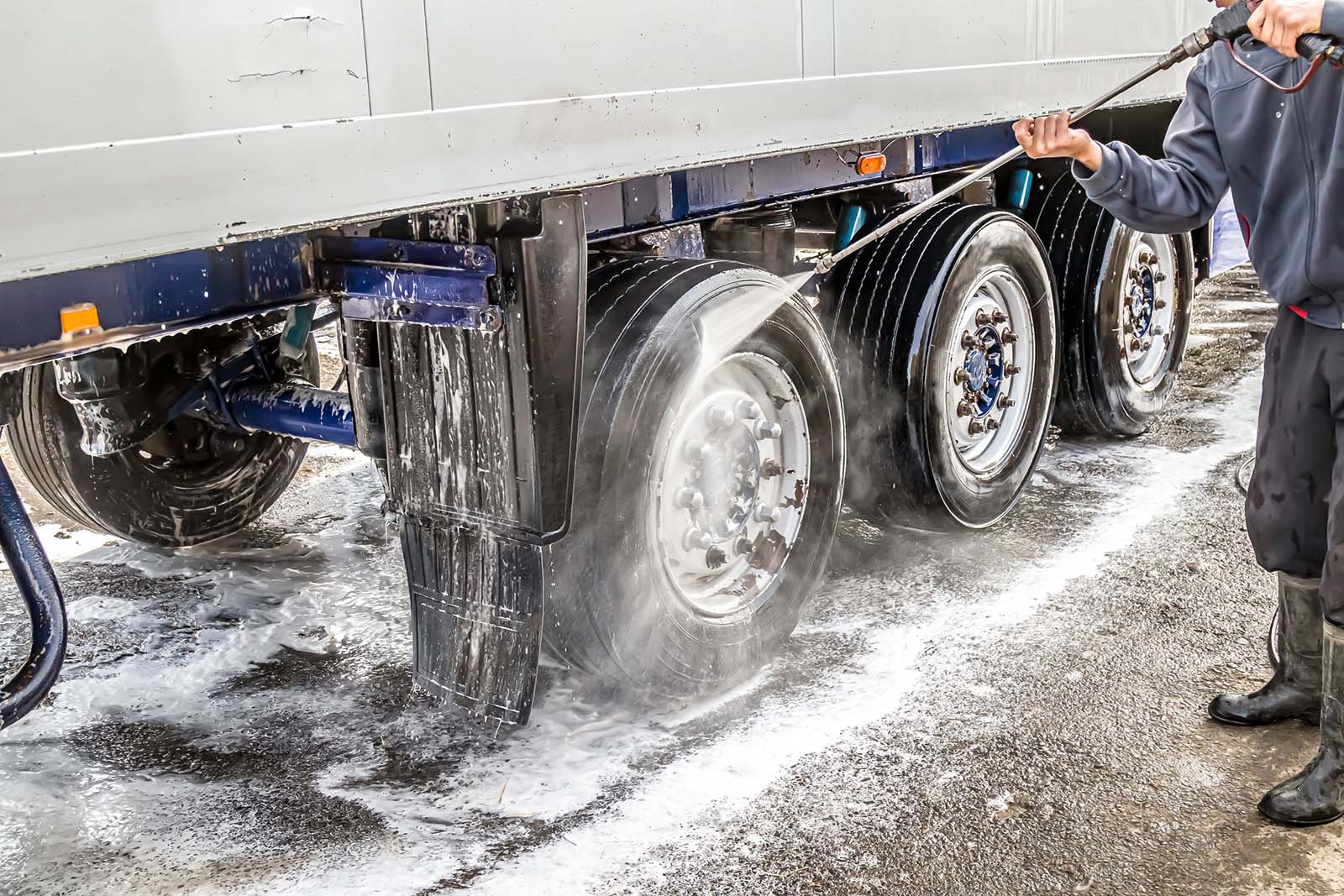
a Truck Wash!
1. Types of Truck Washes:
-
Automated Truck Wash:
In an automated truck wash, the truck drives through a series of mechanical brushes and sprays. This method is fast and efficient, especially for larger fleets. It’s typically done at specialized facilities. -
Hand Wash (Manual):
This method involves workers using sponges, brushes, soap, water, and pressure washers to clean the truck by hand. It’s more thorough and can be customized to focus on certain areas of the truck that may need special attention (like the wheels, engine bay, or undercarriage). -
Self-Serve Truck Wash:
Similar to self-serve car washes, this allows truck drivers to use high-pressure hoses and brushes to wash their own trucks. The customer typically pays for the wash time at a station.
2. Cleaning Components:
-
Exterior:
This includes washing the body, wheels, windows, mirrors, and any other visible part of the truck. Special attention is given to the tires and undercarriage, as these parts tend to accumulate a lot of dirt. -
Interior (Optional):
If included, the interior is cleaned by vacuuming the carpets, wiping down surfaces, and cleaning the dashboard. Sometimes, air fresheners or protective treatments are applied. -
Engine Bay:
Some truck washes also include a cleaning of the engine area to remove grease and dirt buildup. This helps to maintain engine health and allows for easier inspections.
3. Why It’s Important:
-
Maintenance:
Regular washing helps prevent dirt, road salt, and grime from accumulating, which can cause rust or corrosion, especially in hard-to-reach areas. -
Fuel Efficiency:
Keeping the truck clean, particularly the wheels and undercarriage, can help improve aerodynamics, which can positively affect fuel efficiency. -
Brand Image:
A clean truck reflects well on the company, signaling professionalism and pride in the equipment. -
Legal Compliance:
In some areas, there are regulations that require vehicles to be free from hazardous materials or excessive dirt, especially when driving through agricultural or environmentally-sensitive zones.
4. Truck Wash Chemicals:
-
Soaps and Detergents:
Special truck-specific detergents are used to remove grime, grease, and road salts. -
Wheel Cleaners:
These help remove brake dust and tar that can accumulate on the wheels. -
Polishes and Waxes:
These are used to give the truck’s paintwork a protective layer, helping it to shine and making it easier to clean next time.
Would you like to know more about an